
A brand can start taking shape faster than many new business owners expect. With a focused weekend and a handful of simple digital tools, you can define a voice, create a logo, choose colors, build core marketing assets, launch a website, and prepare social content. Speed doesn't mean skipping strategy. It means making smart first-round decisions without getting trapped in endless tweaking. A polished foundation gives a new business something consistent to show customers while leaving plenty of room to refine its identity over time.
Brand-Building Toolkit at a Glance
|
Tool |
Best Used For |
|---|---|
|
ChatGPT |
Brand positioning, voice, and messaging |
|
Looka |
Logo creation and visual identity |
|
Coolors |
Brand color palettes |
|
Canva |
Brand kits and marketing assets |
|
Squarespace |
Building a branded website |
|
Buffer |
Planning and launching social content |
Use ChatGPT to Shape Your Brand Personality
Before choosing fonts or designing a logo, decide what the brand should communicate. ChatGPT can help brainstorm ideas, organize rough thinking, refine writing, and pressure-test marketing messages. Marketers can use it to explore positioning statements, brand personality traits, customer promises, taglines, and different versions of an elevator pitch.
Start with details about the business, ideal customer, main benefit, and desired personality. Then compare several directions instead of accepting the first suggestion. A playful neighborhood bakery will need different language from a financial consulting firm. Save a short brand voice description along with several sample phrases. That small reference can make later website copy, social posts, and marketing materials feel much more consistent.
Create a Logo and Identity With Looka
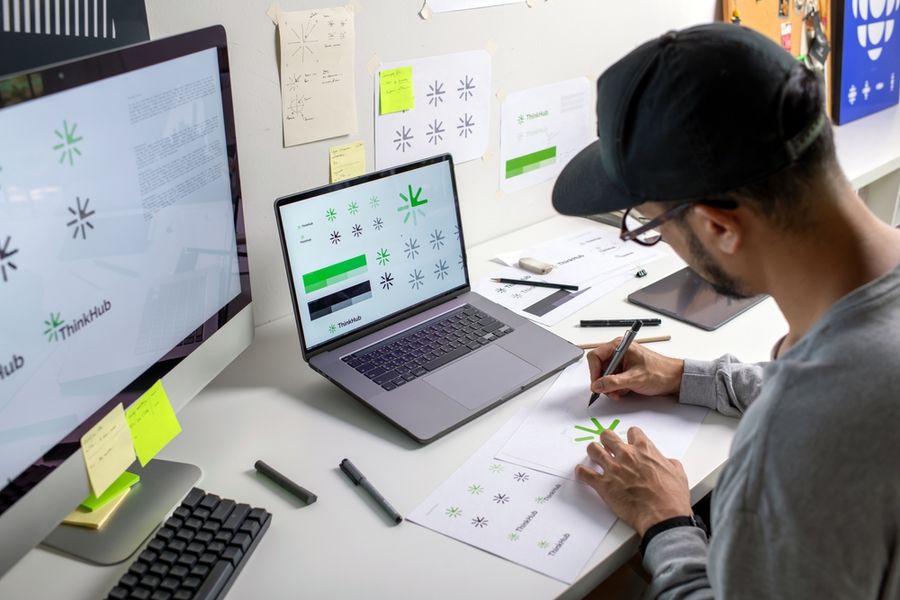
Looka can help move a brand from an idea to a recognizable visual identity. Its logo maker uses preferences such as styles, colors, and symbols to generate options that users can customize. Once a logo is selected, Looka's Brand Kit can extend the identity into fonts, colors, social graphics, business cards, advertisements, presentations, and other marketing materials.
Don't treat an automated logo suggestion as something that has to remain untouched forever. The weekend goal is to create a strong, usable starting point. Look closely at legibility, simplicity, and how the mark works at different sizes. Avoid choosing a design solely because it looks trendy. A logo should support the personality established earlier and remain recognizable on a website, social profile, email signature, or printed piece without requiring constant explanation.
Find Your Brand Colors With Coolors
Color can quickly make unrelated marketing pieces feel connected. Coolors provides a palette generator, inspiration libraries, an image picker, a color picker, and tools for checking how combinations work together. Its Palette Visualizer can also show colors in real design contexts, while the Contrast Checker helps users consider accessibility when pairing text and backgrounds.
Keep the first palette manageable. Pick one or two primary colors, a few supporting shades, and practical neutrals for backgrounds and text. Write down the color codes so the same shades can be used everywhere. Try the palette on realistic materials before committing. A combination that looks attractive as five squares may feel very different on a homepage or social graphic. Consistency matters more than having dozens of colors available, especially during an early brand launch.
Turn the Look Into Marketing Assets With Canva
Once the logo and colors are settled, Canva can help turn individual choices into a usable marketing system. Brand Kit features let users organize logos, fonts, colors, assets, and brand guidelines in one place. Brand elements can then be applied across designs, helping businesses keep social graphics, presentations, promotional materials, and other visual content more consistent.
Use the weekend to create a small set of reusable templates rather than dozens of finished designs. Consider a social post, announcement graphic, testimonial layout, presentation cover, and simple promotional piece. Repetition is useful when it creates recognition. Keeping the same typography, spacing, colors, and logo treatment across several assets can make a young brand look far more established. Save templates with clear names so future marketing work starts from an approved foundation instead of a blank page every time.
Give the Brand a Home With Squarespace
A brand needs somewhere customers can understand what it offers. Squarespace provides customizable templates, drag-and-drop editing, domain options, and AI-assisted website building through its Blueprint tools. Users can adjust layouts, images, colors, fonts, and page structure without needing to know how to code, making it practical for a focused weekend website project.
Keep the first website intentionally small. A clear homepage, about section, product or service information, contact option, and strong call to action may be enough to launch. Apply the same colors, logo, photography style, and voice established earlier so visitors get one coherent impression. Check the mobile version carefully before publishing. A five-page site that clearly communicates the brand is usually more useful than twenty unfinished pages filled with vague copy simply because the website builder makes adding pages easy.
Prepare Your Social Launch With Buffer
Buffer can help organize the final stage of a weekend brand build by turning scattered social ideas into a simple publishing plan. The platform supports content creation, organization, scheduling, publishing, and performance insights across multiple social networks. Its tools can also help users adapt ideas for different channels instead of manually recreating every post from scratch.
Prepare a small batch of launch content before announcing the brand. One post might introduce the business, another can explain the problem it solves, and others can feature the founder story, a product benefit, frequently asked questions, or a behind-the-scenes moment. Scheduling everything at once reduces pressure after launch day. Avoid filling an entire month with promotional messages. A new brand needs personality and usefulness too, so leave room for conversation, customer questions, and spontaneous ideas once people begin responding.
A Weekend Is Enough to Build the Foundation
A complete brand isn't created in 48 hours. Reputation, customer trust, and recognition develop through repeated experiences over time. A focused weekend can still produce something incredibly valuable: a clear personality, visual identity, color system, marketing templates, functional website, and initial social presence. That foundation gives the business a consistent starting point instead of a collection of disconnected ideas.
The smartest approach is to launch with enough polish to feel intentional, then improve based on real feedback. Logos can be refined, messaging can get sharper, and templates can expand as the business learns what customers respond to. Tools such as ChatGPT, Looka, Coolors, Canva, Squarespace, and Buffer can remove much of the technical friction, leaving more energy for the decisions that make a brand memorable in the first place.